

A candid reflection from the Asia Democracy Assembly 2025—on Bangladesh, Japan, and Korea; the “masculinity of the state”; and the courage and solidarity found across Asia’s civil society.

Introduction
I attended the Asia Democracy Assembly 2025 in Bangkok from November 1-4. The theme was "Defending Democracy, Mobilizing Movements, and New Frontiers for Citizen Action" – which sounds pretty ambitious, but honestly? It delivered.
Thanks to the Heinrich Böll Foundation East Asia, I was able to attend and present at the gender and democracy session on the final day. Here's what went down.
Session 1: Launch of the ANNI Report 2025
The final morning kicked off with a session on National Human Rights Institutions (NHRIs) in Asia. Regional experts delivered some seriously sharp commentary on how these institutions actually perform – and spoiler alert: it's complicated.
What really struck me was one of the speakers’ reflections on a South Asian country. They captured something I've been thinking about but couldn't quite articulate:
"Our governments seem to have mastered the art of superficially building institutions, which speak the vocabulary of Paris principles, but at the end of the day, they do protect the state from scrutiny, rather than protect citizens from abuse."
Ouch. They went on to emphasize that independence isn't something you can just legislate into existence – it has to be exercised, demonstrated visibly and consistently.
This drove home something crucial: you can't just create a mechanism, dust off your hands, and call it a day. You have to make sure it actually works. That's exactly why organizations like ANNI matter so much.
Hearing directly from people on the ground in South Korea, Myanmar, and other countries facing real human rights crises was eye-opening. Japan doesn't even have an NHRI yet, which is... embarrassing, frankly. But seeing how vibrant and determined Asia's activists are gave me a serious boost. I'm more committed than ever to pushing Japan to step up and join this regional solidarity.
Session 3: Reimagining Masculinities
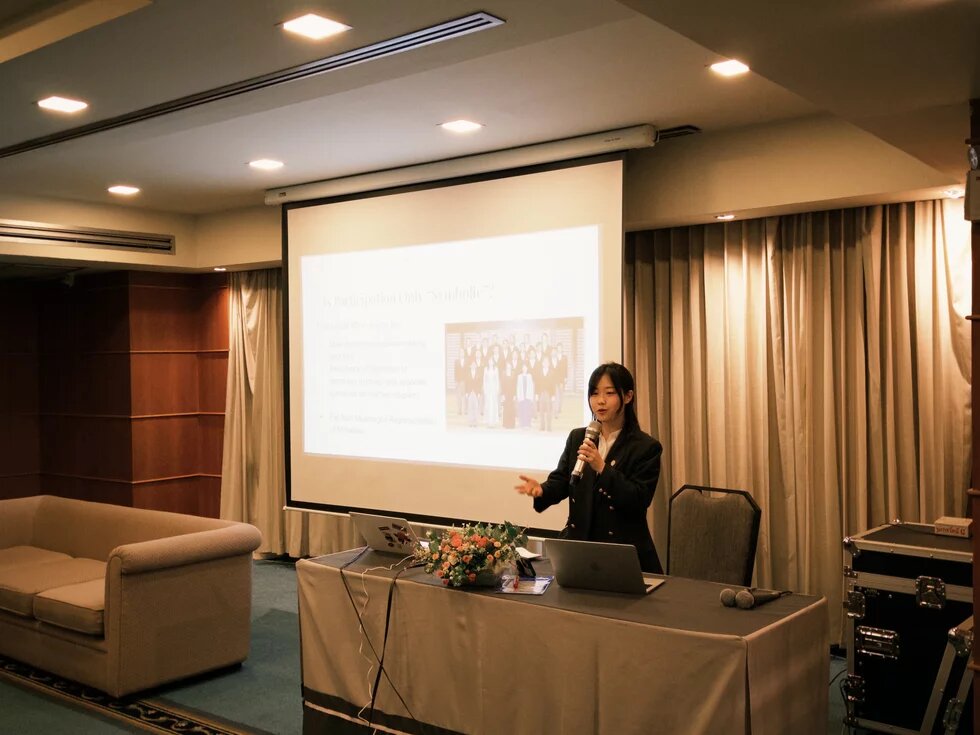
Our presentation: "Rethinking and Reimagining Democracy in Japan from the perspective of Masculinity"
For this session, I worked with Ms. Sari Kamiyama (Founder of IMSS) to create a presentation that, honestly, needed to be said.
When you're at a gathering reflecting on democracy in Asia, Japan can't just show up and pretend our history doesn't matter. During the Pacific War, we positioned other Asian countries as "children" or "younger brothers" in our colonial framework. Eighty years later, and I'm not convinced the fundamental character of the state has really changed.
Our angle was to look at "masculinity" not just as an individual thing, but as something that operates at the level of the state itself.
We pointed to some pretty glaring examples: abysmal female representation in politics, the ongoing resistance to allowing separate surnames for married couples, the marginalization of foreigners, and the rise of exclusionary populism. We argued that these are all symptoms of a desire to return to a traditional patriarchal family-state model – basically a "crisis of masculinity" playing out against economic insecurity.
The goal was to show how historically constructed discrimination connects directly to today's democratic crisis. We pushed for "Transformative Masculinity" not just as a personal growth project, but as something that needs to happen at the structural level.
The Real MVP: Korean Activists
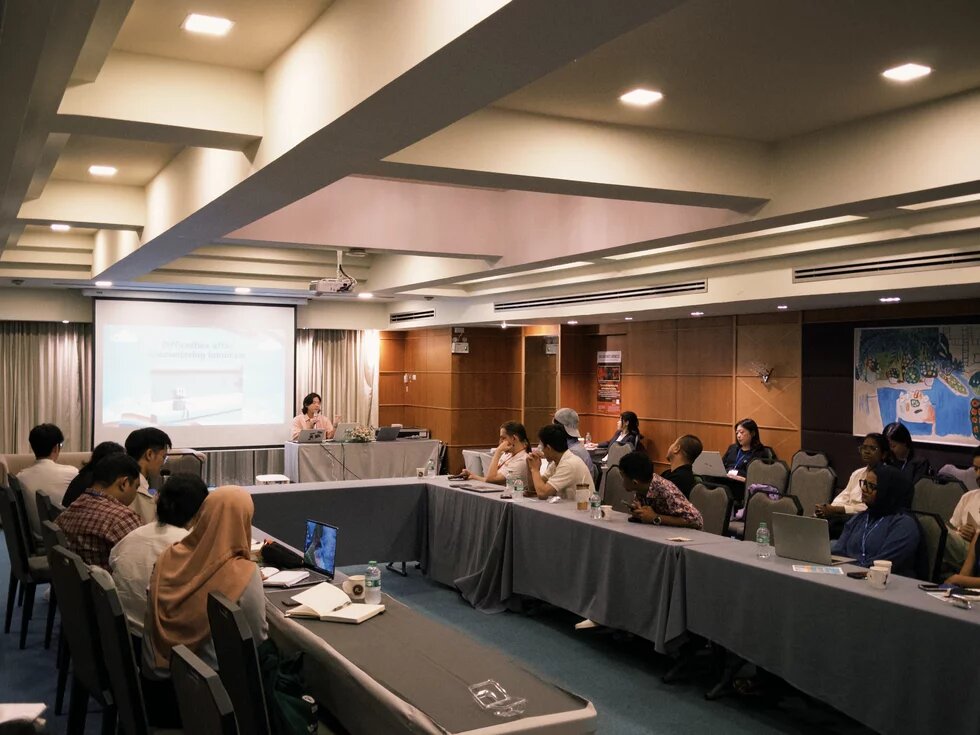
One of the best parts of this whole trip was getting to hang out with Korean activists, including the folks from "Feminism with Him."
The more we talked outside the formal sessions, the more I realized how similar Japan and Korea's gender issues are – and how much more energy Korean activists are bringing to the fight.
Here's what struck me: these people are on fire. Most of them work regular 9-to-6 jobs to pay the bills, then do social movement work after hours. That's not sustainable by any normal measure, but they're doing it anyway. And you know what? I'm convinced this is exactly why Korea was able to respond so quickly and effectively to last year's martial law declaration. A robust civil society built by people with that level of commitment? That's how you defend democracy.
Being at this event and seeing what's happening across Asia really threw Japan's shortcomings into sharp relief. I came away with courage and wisdom from activists in Korea and beyond – and honestly, I feel a bit woken up. The connections I made here are going to be crucial for Japan-Korea civil society collaboration on gender-just democracy going forward.
Thanks to
Huge thanks to the Heinrich Böll Foundation East Asia, Philip, and all the amazing Korean activists who made this possible. I'm taking everything I learned here back home and putting it to work for democracy and gender equality in Asia.